

Why Choose Toughened Polypropylene Over Standard PP for Demanding Applications?
2026-09-30
Standard polypropylene has earned its place as one of the most versatile and cost-effective thermoplastics on the market. Its lightweight nature, chemical resistance, and ease of processing make it a go-to material for countless applications. Yet when engineers push the boundaries of performance—demanding parts that survive impact, flex without fracturing, and maintain structural integrity under stress—standard PP reveals its most significant weakness: brittleness at low temperatures and poor notched impact resistance. This is where toughened polypropylene enters the picture, and for manufacturers across automotive, appliance, and industrial sectors, understanding the difference between standard and toughened grades can mean the difference between product failure and market success.
At Suzhou Accom New Material Technology Co., Ltd. , we have dedicated over a decade to advancing high-performance engineering plastics, including a comprehensive portfolio of toughened polypropylene solutions engineered to bridge the gap between stiffness and impact resistance. Since our founding in 2014, Accom® has grown into a globally recognized manufacturer and supplier of advanced polymer materials, with products exported to North America, Europe, and Southeast Asia, serving Fortune 500 companies and industry leaders across multiple sectors.
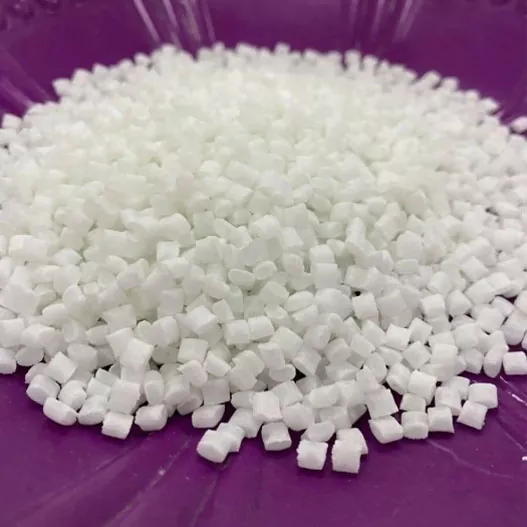
What Makes Toughened Polypropylene Different?
The fundamental distinction between standard PP and toughened polypropylene lies in how the material responds to mechanical stress. Standard PP is a semi-crystalline polymer with a regular molecular structure that provides excellent stiffness and heat resistance but limited ability to absorb energy before cracking. Toughened polypropylene addresses this limitation through targeted modification strategies that introduce elastomeric phases or nucleating agents into the polymer matrix.
The most widely employed approach involves physical blending with elastomers such as ethylene-propylene-diene monomer (EPDM) or polyolefin elastomer (POE). These rubbery phases remain ductile even at temperatures as low as −45°C, effectively toughening polypropylene under conditions where the base resin would become brittle. POE has increasingly been considered a superior substitute for traditional EPDM modifiers because POE/PP blends exhibit lower torque values during processing, indicating better processability and more efficient toughening at lower loading levels.
More recent innovations have explored β-phase crystallization induced by hyperbranched nucleating agents. Research demonstrates that this approach can increase tensile strength by 35.78% (to 42.5 MPa) and notched impact strength by 140% (to 13.2 kJ/m²) compared to pure PP, achieving simultaneous improvements in both stiffness and toughness.
| Modification Approach | Key Mechanism | Typical Impact Strength Improvement | Processing Considerations |
|---|---|---|---|
| POE Blending | Elastomeric phase dispersion | Moderate to high | Good flow, lower torque |
| EPDM Blending | Rubber particle toughening | Moderate | Higher loading required |
| β-Phase Nucleation | Crystal structure modification | High (up to 140%) | Requires precise additive control |
| Reactive Blending | Interfacial compatibilization | High | More complex compounding |
The Importance and Role of Toughened Polypropylene in Modern Manufacturing
The significance of toughened polypropylene extends far beyond laboratory performance metrics. In practical manufacturing environments, this material class addresses a critical challenge: balancing the competing demands of rigidity and impact resistance. Components that are too stiff crack under sudden loads; components that are too flexible fail dimensional tolerance requirements. Toughened PP occupies the optimal middle ground.
In the automotive industry, which accounts for 48% of total modified polypropylene applications, the preference for lightweight materials continues to drive substantial demand. A single vehicle now incorporates tens of kilograms of modified polypropylene in applications ranging from bumpers and side skirts to instrument panels, door trims, and HVAC housings. High-impact copolymer grades such as those used in bumper applications deliver the stiffness-toughness balance essential for passenger safety and vehicle durability.
The home appliance sector presents another compelling validation of toughened PP's value. A Guangdong-based home appliance brand documented a dramatic improvement in product quality after switching from standard polypropylene to Accom® Highly Toughened Polypropylene. Their drop test pass rate surged from 65% to 98%, demonstrating that material innovation directly translates to reduced warranty claims, fewer production losses, and enhanced brand reputation.
Why this matters:
-
Durability in the field: Products withstand accidental drops, vibration, and thermal cycling without cracking
-
Design freedom: Engineers can specify thinner walls and more complex geometries without sacrificing structural integrity
-
Cost efficiency: Fewer rejected parts and lower field failure rates reduce total cost of ownership
-
Regulatory compliance: Toughened PP grades can meet stringent automotive and medical standards while remaining recyclable
Real-World Performance: Toughened Polypropylene vs. ABS
When selecting materials for demanding applications, engineers frequently evaluate toughened polypropylene against ABS (acrylonitrile butadiene styrene), another widely used engineering thermoplastic. Each material offers distinct advantages.
ABS generally provides higher tensile strength (40–50 MPa compared to 30–38 MPa for PP) and superior rigidity for structural applications. It also exhibits lower molding shrinkage and reduced warpage tendency. However, ABS carries a higher price point and inferior chemical resistance compared to polypropylene. Toughened PP offers better heat resistance than ABS, floats on water (density below 1 g/cm³), resists moisture absorption, and delivers significant cost advantages.
For applications where chemical exposure, moisture resistance, and cost efficiency are priorities, toughened polypropylene consistently outperforms ABS. The automotive interior trim market has largely standardized on mineral-filled toughened PP compounds precisely because they combine scratch resistance, low odor, and dimensional stability at a price point that ABS cannot match.
| Performance Parameter | Toughened PP | ABS | Advantage |
|---|---|---|---|
| Tensile Strength | 27–38 MPa | 40–50 MPa | ABS |
| Notched Impact (23°C) | Up to 80 kJ/m² | 20–35 kJ/m² | Toughened PP |
| Density | 0.90–1.05 g/cm³ | 1.04–1.07 g/cm³ | Toughened PP |
| Heat Resistance | Superior | Moderate | Toughened PP |
| Chemical Resistance | Excellent | Good | Toughened PP |
| Relative Cost | Lower | Higher | Toughened PP |
Accom®'s Toughened Polypropylene Portfolio
Suzhou Accom New Material Technology Co., Ltd. offers a comprehensive range of toughened polypropylene solutions tailored to diverse application requirements. Our flagship PP-POE30% (ME56) grade incorporates 30% polyolefin elastomer content, delivering superior elasticity and impact resistance ideal for applications demanding flexibility and durability.
Our Highly Toughened Polypropylene achieves impact strength of up to 80 kJ/m² while maintaining flexural modulus at an excellent level of 1500 MPa, effectively resolving the traditional trade-off between stiffness and toughness. This balance is achieved through proprietary compounding technology that optimizes the dispersion and interfacial adhesion of the elastomeric phase within the polypropylene matrix.
Beyond mechanical performance, Accom® toughened polypropylene grades offer:
-
Excellent processability across injection molding and extrusion platforms
-
Color-matching capability for aesthetic-critical applications
-
UV stabilization for outdoor exposure
-
Low odor and low VOC formulations suitable for automotive interiors
-
Compliance with ISO 9001, RoHS, and REACH standards
Our materials have been adopted by leading automotive brands including BYD Auto and Changan Automobile, as well as electronics manufacturers such as Huawei and Xiaomi, validating their performance in the most demanding real-world conditions.
Selecting the Right Toughened Polypropylene Grade
Choosing the optimal toughened polypropylene grade requires careful consideration of application requirements. Key selection criteria include:
-
Impact performance at service temperature: Specify notched Izod or Charpy values at the lowest expected operating temperature, not just at room temperature
-
Stiffness requirements: Flexural modulus determines load-bearing capacity and dimensional stability
-
Processing method: Injection molding grades require different melt flow characteristics than extrusion grades
-
Environmental exposure: UV, chemical, and moisture resistance must be matched to the end-use environment
-
Regulatory compliance: Automotive, medical, and food-contact applications each impose distinct material certification requirements
Suzhou Accom's technical team works directly with customers to customize formulations that meet specific performance targets. Whether the requirement is a high-flow grade for thin-wall injection molding or a high-impact grade for structural components, we provide tailored solutions backed by rigorous testing and quality assurance.
Ready to elevate your product performance with advanced toughened polypropylene solutions? Contact Suzhou Accom New Material Technology Co., Ltd. today to discuss your application requirements, request material samples, or obtain technical data sheets. Our engineering team is prepared to help you select or customize the ideal toughened polypropylene grade for your next project. Contact us now to discover how Accom® materials can transform your product durability, reduce failure rates, and deliver measurable competitive advantage.