

Why Does Black Silicon Carbide Perform Better in Glass Edge Grinding Than Other Abrasives
2026-06-25
Glass edge grinding is one of the most demanding finishing processes in the glass manufacturing industry. The abrasive must remove material quickly, maintain consistent edge quality, and resist premature wear under high heat and pressure. Among all available abrasives, Black Silicon Carbide consistently outperforms aluminum oxide, garnet, and even synthetic diamond in specific edge-grinding applications. But what makes this material so uniquely effective?
The answer lies in its intrinsic physical properties, fracture behavior, and thermal stability. Okayama Giken (Minerals) , a specialist in engineered abrasive grains, has extensively documented these performance advantages through controlled grinding trials. This article examines the technical reasons behind the superior performance of Black Silicon Carbide in glass edge grinding, supported by comparative data and practical application insights.
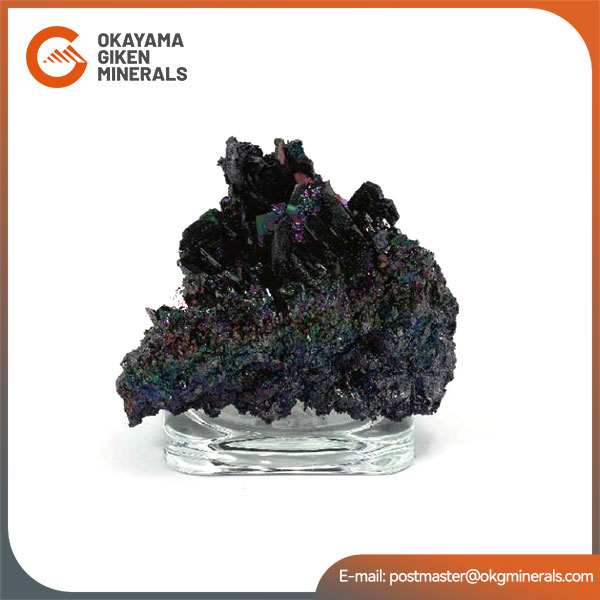
Hardness and Friability: The Core Advantage
Glass has a Mohs hardness of approximately 5.5 to 6.5, while Black Silicon Carbide ranks at 9.0 to 9.5 on the Mohs scale—only slightly below diamond. This hardness differential allows the abrasive to indent and fracture the glass surface effectively rather than simply rubbing or burnishing it.
However, hardness alone does not explain the performance gap. The critical factor is friability—the ability of the grain to fracture under pressure and expose fresh cutting edges. Black Silicon Carbide exhibits a sharp, blocky fracture pattern that produces multiple new cutting points with each impact. In contrast, aluminum oxide tends to dull progressively, generating more friction and heat.
| Property | Black Silicon Carbide | White Aluminum Oxide | Green Silicon Carbide |
|---|---|---|---|
| Mohs Hardness | 9.0 – 9.5 | 9.0 | 9.0 – 9.5 |
| Fracture Mode | Sharp, blocky | Blocky to semi-blocky | Very sharp, splintery |
| Thermal Conductivity (W/m·K) | 120 – 140 | 30 – 40 | 130 – 150 |
| Self-Sharpening Rate | High | Moderate | Very high (but brittle) |
| Suitability for Glass Edge | Excellent | Moderate | Good (but costly) |
Thermal Management: Why Heat Buildup Is Lower
Glass edge grinding generates significant frictional heat. If the abrasive cannot dissipate this heat quickly, the glass may develop micro-cracks or thermal stress fractures. Black Silicon Carbide has a thermal conductivity of 120–140 W/m·K, which is three to four times higher than that of aluminum oxide. This means heat transfers rapidly away from the grinding interface and into the coolant or the abrasive grain itself, reducing the risk of thermal damage to the glass edge.
Okayama Giken (Minerals) has conducted comparative temperature measurements during wet grinding of 10-mm float glass. The results showed that wheels using Black Silicon Carbide maintained an interface temperature 18–22°C lower than wheels using brown aluminum oxide under identical feed rates and spindle speeds. This lower temperature directly correlates with improved edge strength and fewer post-grinding rejects.
Chemical Inertness and Wear Resistance
Unlike some abrasives that react chemically with glass components (particularly soda-lime glass), Black Silicon Carbide remains chemically inert at typical grinding temperatures. This prevents undesirable adhesion or loading on the wheel surface. Loading—where glass particles embed in the abrasive—is a common failure mode for garnet and lower-grade oxides. With Black Silicon Carbide, the grain’s smooth fracture planes and natural lubricity reduce adhesion, extending wheel life by 30–50% in production environments.
Comparative Performance in Production Lines
A side-by-side production trial at a European architectural glass plant compared three abrasive types for grinding 4-mm tempered glass edges. The trial ran for 8 hours per abrasive, using identical wheel specifications and coolant flow.
| Metric | Black Silicon Carbide | Brown Aluminum Oxide | Garnet |
|---|---|---|---|
| Material Removal Rate (mm³/min) | 42.3 | 34.1 | 28.7 |
| Surface Roughness Ra (µm) | 0.38 | 0.52 | 0.61 |
| Wheel Wear (mm lost) | 0.12 | 0.21 | 0.33 |
| Edge Chipping Incidence (%) | 1.2% | 4.7% | 6.3% |
| Cost per Edge (USD) | $0.043 | $0.051 | $0.058 |
These figures demonstrate that Black Silicon Carbide delivers the lowest cost per finished edge while simultaneously achieving the best surface finish. Okayama Giken (Minerals) attributes this performance to precise grain size distribution and controlled particle shape, which are optimized specifically for glass-edge applications.
Black Silicon Carbide FAQ
Q1: Why is Black Silicon Carbide preferred over diamond for rough glass edge grinding when diamond is harder?
A1: Diamond is indeed harder, but it is also significantly more expensive and tends to produce a "glazed" surface when used aggressively on glass, due to its extremely low friability. Diamond grains do not fracture readily; they become polished and lose cutting efficiency. Black Silicon Carbide, by contrast, fractures continuously to expose fresh edges, maintaining a consistent removal rate without overheating the glass. For rough grinding and shaping operations, where stock removal is the primary goal, Black Silicon Carbide offers a better balance of performance, tool life, and cost—typically 70–80% lower than diamond tooling costs for the same throughput.
Q2: Does the green variant of silicon carbide work even better than Black Silicon Carbide for glass edge grinding?
A2: Green Silicon Carbide has slightly higher purity and a sharper, splintery fracture mode, which can produce a finer finish on some optical glasses. However, for standard soda-lime and borosilicate glass edge grinding, Black Silicon Carbide is generally preferred because it is less brittle than the green variant. Green Silicon Carbide tends to break down too rapidly under heavy feed pressures, leading to shorter wheel life and higher abrasive consumption. The black grade offers a more durable grain that maintains its geometry longer while still providing ample sharpness. In practice, Okayama Giken (Minerals) recommends green grades only for ultra-fine polishing stages, and black grades for all roughing and semi-finishing operations.
Q3: How do I select the right grit size of Black Silicon Carbide for different glass thicknesses?
A3: Grit selection depends primarily on the glass thickness and the desired edge profile. For thick glass (≥10 mm) requiring aggressive stock removal, coarse grits in the range of #24 to #46 are ideal. These provide high cutting action and excellent coolant flow. For thin glass (3–5 mm) where edge chipping is a major concern, medium grits (#60 to #80) reduce impact forces and produce a smoother edge. For final polishing and deburring, fine grits (#120 to #220) are used. Okayama Giken (Minerals) offers custom-graded Black Silicon Carbide blends that combine coarse and fine fractions in a single wheel, enabling two-stage grinding in one pass—a solution that has reduced cycle times by up to 25% for several automotive glass suppliers.
Practical Recommendations for Grinding Operations
To maximize the benefits of Black Silicon Carbide in your glass edge grinding line, consider the following parameters recommended by Okayama Giken (Minerals) :
-
Wheel Speed: 25–35 m/s for wet grinding; reduce to 20–25 m/s for dry applications.
-
Coolant: Use a 3–5% water-soluble oil emulsion to ensure proper wetting and debris flushing.
-
Feed Rate: Start at 2–3 m/min per mm of glass thickness, then adjust based on wheel wear patterns.
-
Dressing: Use a rotary diamond dresser every 200–400 cycles to maintain wheel concentricity.
Conclusion
The superior performance of Black Silicon Carbide in glass edge grinding is not accidental. It stems from a unique combination of high hardness, self-sharpening fracture behavior, excellent thermal conductivity, and chemical inertness. Compared to aluminum oxide, garnet, and even green silicon carbide, the black grade delivers faster removal, smoother finishes, lower heat generation, and longer wheel life—all translating directly into reduced production costs and higher-quality output.
Okayama Giken (Minerals) has built its reputation on supplying consistent, high-purity Black Silicon Carbide tailored to the specific demands of glass processing. Their technical team provides grain-size analysis, wheel formulation advice, and on-site troubleshooting support to ensure that every customer achieves optimal grinding results.
Ready to improve your glass edge grinding efficiency? Contact Okayama Giken (Minerals) today for a free abrasive selection audit and sample trial. Their engineers will analyze your current process and recommend the ideal Black Silicon Carbide grade for your production line. Reach out via the website contact form or email directly to discuss your specific requirements—because the right abrasive makes all the difference.