

Article Summary: Snow and ice create serious winter maintenance challenges, from slippery walkways and traffic disruption to increased labor costs and potential infrastructure damage. Traditional deicing products can also introduce environmental concerns when dissolved salts enter soil, waterways, and surrounding landscapes. An Environmentally Friendly Snow Melting Agent can help organizations manage these challenges while taking a more responsible approach to material selection and application. This guide explains how these products work, which environmental and performance factors matter, how to compare available formulations, and how to use deicing agents more efficiently. It also outlines practical purchasing considerations for businesses seeking reliable winter maintenance solutions from suppliers such as Kunyang.
1. Understanding the Challenges of Snow and Ice
Winter weather can disrupt transportation, commercial operations, public services, and everyday movement. When snow accumulates or water freezes on exposed surfaces, roads, parking areas, loading zones, entrances, and pedestrian paths can quickly become hazardous.
For businesses and facility managers, the consequences extend beyond inconvenience. Slippery surfaces can increase accident risks, snow removal requires additional labor and equipment, and delayed deliveries can interrupt supply chains. Repeated freeze-thaw cycles may also contribute to surface deterioration, depending on the pavement material and site conditions.
Deicing products help reduce ice adhesion and support safer access. However, the wrong product or excessive application can increase material consumption, cleanup requirements, corrosion concerns, and environmental exposure.
The challenge is therefore not simply to melt snow as quickly as possible. Buyers need a product that fits the expected temperature range, surface type, safety requirements, operating budget, and environmental management plan.
2. What Is an Environmentally Friendly Snow Melting Agent?
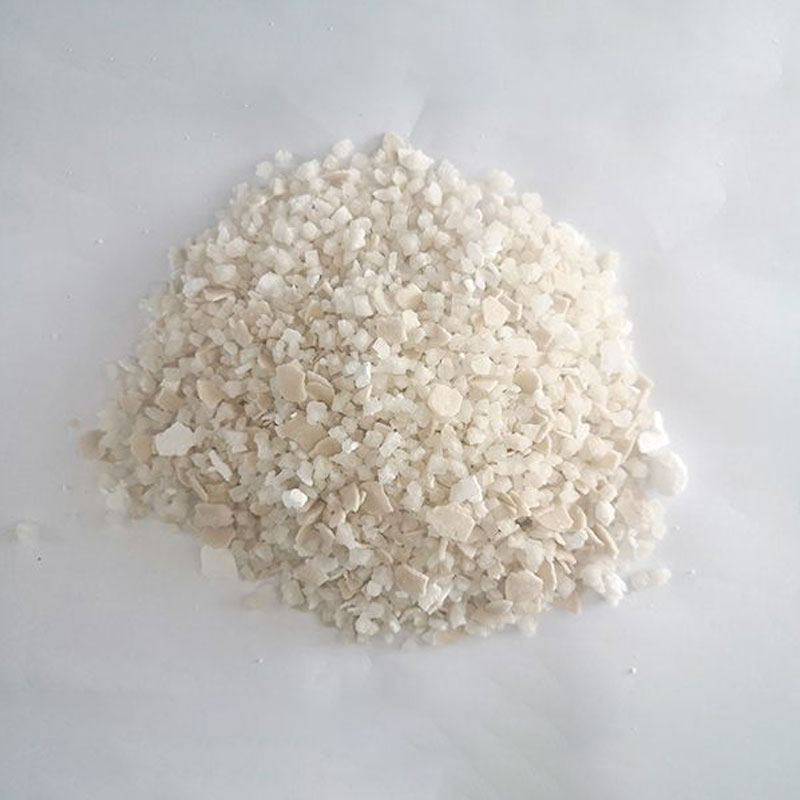
An Environmentally Friendly Snow Melting Agent is a deicing or ice-control product developed or selected with the aim of reducing certain environmental impacts while helping manage snow and ice. Depending on its formulation, it may use different salts, mineral-based ingredients, organic components, corrosion-control additives, or blended technologies.
However, the term "environmentally friendly" does not mean that a product has no environmental impact. All formulations should be assessed according to their actual composition, application rate, toxicity profile, biodegradability where relevant, corrosion behavior, and effects on soil and water.
Important product characteristics
- Deicing performance: The product should perform within its documented temperature and application range.
- Material compatibility: Its effects on concrete, metals, vehicles, and nearby infrastructure should be understood.
- Environmental profile: Ingredients and available test data should support any environmental claims.
- Practical application: The formulation should be suitable for the intended equipment, surface, and maintenance schedule.
- Storage stability: Packaging and storage requirements should be manageable under local conditions.
Because formulations differ, buyers should request a technical data sheet and safety data sheet rather than relying on product descriptions alone. These documents help confirm composition, handling precautions, application guidance, and relevant limitations.
3. Why Environmental Considerations Matter
Reducing unnecessary salt release
Many conventional deicing salts dissolve in meltwater and can be transported into drainage systems, streams, lakes, and surrounding soil. Depending on the chemical and the quantity released, repeated applications may increase salinity and affect sensitive plants, aquatic organisms, and local water quality.
A more responsible snow and ice management program aims to apply only the amount needed for the intended result. Selecting a suitable formulation and removing loose snow before applying a deicer can help reduce unnecessary product use.
Managing corrosion risks
Some deicing chemicals can accelerate corrosion of vehicles, metal fittings, reinforcement, and other exposed components. Corrosion-inhibiting additives may help reduce particular forms of material damage under specified test conditions, but they do not eliminate all corrosion risks.
For commercial sites, choosing a compatible product may help control maintenance costs. Buyers should review test methods, material types, and comparative results instead of assuming that every product labeled environmentally friendly is non-corrosive.
Protecting landscaped areas
Repeated exposure to deicing runoff may stress vegetation or alter soil conditions. This can be especially important around landscaped entrances, parking lots, residential communities, and commercial properties with planted borders.
Careful spreading, appropriate drainage management, and prompt removal of excess product can help reduce unnecessary exposure. Where vegetation is particularly sensitive, site-specific advice may be needed.
Supporting responsible purchasing
Environmental performance is only one part of product selection. Procurement teams should also consider effectiveness, application frequency, transportation, packaging, worker safety, and the amount of material required to maintain acceptable surface conditions.
A product with a higher purchase price may still be commercially attractive if verified performance allows lower application quantities or reduces maintenance demands. The actual benefit should be established through documented specifications and controlled field evaluation.
4. How Snow Melting Agents Work
Different deicing formulations work through different physical and chemical mechanisms. Many conventional products dissolve in the thin layer of water on an icy surface and lower its freezing point. This can help loosen ice and make mechanical removal easier, provided the conditions fall within the product's effective operating range.
Some products are supplied as solid granules, while others may be available as liquids or treated blends. Liquids can spread across a surface and may be used for pre-treatment where permitted by the product instructions. Solid products may be useful for targeted treatment, depending on particle size, moisture conditions, and application equipment.
Factors that influence performance
- Air and pavement temperature: Lower temperatures can reduce the effectiveness of many conventional deicers.
- Ice thickness: Thick, compacted ice may require mechanical removal before chemical treatment.
- Application rate: Too little product may be ineffective, while excessive use increases cost and environmental exposure.
- Surface condition: Existing moisture, snow accumulation, and surface texture can affect distribution and results.
- Contact time: The time needed to loosen ice varies with the formulation and weather conditions.
No single snow melting agent works equally well in every winter environment. Always follow the manufacturer's temperature limits and application instructions, and maintain suitable mechanical snow removal equipment for conditions that exceed the product's capabilities.
5. Comparing Common Deicing Options
When comparing products, consider more than melting speed or price per bag. The following table provides a general overview of common deicing categories. Actual performance depends on the specific formulation, product grade, temperature, and application method.
| Product Category | Potential Advantages | Important Considerations |
|---|---|---|
| Chloride-based deicers | Widely used, often readily available, and familiar to maintenance teams. | May contribute to corrosion and chloride accumulation in soil and water. |
| Acetate-based formulations | Some formulations are designed for specialized applications where chloride reduction is important. | Cost, oxygen demand in receiving waters, material compatibility, and application requirements need review. |
| Formate-based formulations | May be suitable for selected applications requiring alternatives to conventional chloride salts. | Performance, cost, and environmental characteristics vary by chemical and formulation. |
| Organic or blended deicers | May combine different ingredients to achieve specified performance or handling characteristics. | Composition, biodegradability, residue, and environmental claims should be verified. |
| Abrasive materials | Sand or other suitable grit can improve traction without relying entirely on melting. | Does not melt ice and may require cleanup to prevent sediment accumulation. |
It is important to distinguish between reduced chloride content, lower corrosion under a particular test, biodegradability, and overall environmental safety. These are different characteristics. A formulation may perform well in one category without being superior in every other category.
6. Where Environmentally Friendly Snow Melting Agents Can Be Used
Depending on the product specification and local regulations, environmentally conscious deicing products may be considered for a range of winter maintenance settings.
Commercial properties and business parks
Building entrances, parking areas, loading zones, and pedestrian paths require dependable access during winter weather. A planned application strategy helps maintenance teams manage slippery surfaces without unnecessary material use.
Municipal roads and public walkways
Public works departments must balance mobility, public safety, budgets, and environmental protection. Product selection should account for road materials, local drainage, traffic levels, expected temperatures, and the area's environmental sensitivity.
Industrial facilities and logistics centers
Distribution yards, factory entrances, loading docks, and outdoor work areas may remain active throughout winter. The selected product should be compatible with equipment, surfaces, drainage systems, and operational safety procedures.
Residential communities and landscaped properties
Residential sites may prioritize pedestrian safety and the protection of planted areas, steps, paved paths, and shared parking facilities. Targeted spreading and timely snow removal can help limit excessive product use.
For every application, confirm that the selected agent is approved for the surface and conditions involved. Some products may be unsuitable for certain concrete finishes, metals, sensitive equipment, or specific environmental settings.
7. How to Choose the Right Environmentally Friendly Snow Melting Agent
A structured evaluation helps purchasing teams avoid products that appear attractive in a brochure but fail to meet real operating requirements.
Step 1: Define the operating temperature range
Review typical winter temperatures and the lowest conditions in which the product will be used. Ask the supplier for documented performance limits and test conditions. Do not assume that an agent remains effective at extremely low temperatures simply because it is marketed as high-performance.
Step 2: Identify the target surface
Different pavement materials, coatings, metals, and surrounding structures can react differently to deicing chemicals. Confirm suitability for the intended surface and follow restrictions for newly installed or sensitive concrete.
Step 3: Review the environmental evidence
Request ingredient information, relevant environmental test results, and any applicable certifications. Check what a claim actually measures: biodegradability, aquatic toxicity, corrosion, chloride content, or another defined property.
Step 4: Calculate the total operating cost
Compare the purchase price with the recommended application rate, coverage, storage needs, labor, equipment compatibility, and likely maintenance frequency. A fair comparison uses cost per treated area under comparable weather conditions rather than price per kilogram alone.
Step 5: Confirm safety and handling requirements
Review the safety data sheet for protective equipment, handling precautions, storage requirements, spill response, and first-aid information. Train staff to follow the relevant procedures.
Step 6: Conduct a controlled field trial
For large-scale purchasing, consider testing the proposed product on a representative area. Record temperature, weather, application rate, time to visible effect, residual ice, surface condition, and material consumption. Use the results to compare alternatives objectively.
8. Application and Storage Best Practices
Responsible application is essential even when a product has been selected for its environmental profile. The goal is to achieve the required level of ice control without excessive chemical use.
Before application
- Check the weather forecast, pavement temperature, and expected precipitation.
- Remove loose snow mechanically before applying the deicing agent whenever practical.
- Confirm the surface type and the manufacturer's recommended application rate.
- Inspect spreading equipment and calibrate it where applicable.
During application
- Distribute the product evenly across the designated area.
- Avoid spreading material into drains, watercourses, or planted areas unnecessarily.
- Follow label instructions for temperature, dosage, and any required contact time.
- Use suitable personal protective equipment and prevent unauthorized access where needed.
After application
- Monitor the treated surface and remove loosened ice when safe and practical.
- Reapply only when site conditions and product guidance justify further treatment.
- Collect and dispose of excess material or residues according to local requirements.
- Record consumption and results to improve future application planning.
Storage guidance
Store products in their original, clearly labeled packaging in accordance with the manufacturer's instructions. Protect them from incompatible materials, excessive moisture, contamination, and unauthorized access. For liquid products, confirm container compatibility and measures needed to prevent leaks.
9. Common Mistakes to Avoid
Assuming environmentally friendly means harmless
Even products designed to reduce certain impacts can cause problems when misapplied. Evaluate the actual formulation, environmental data, and recommended dosage.
Applying more product than necessary
Excessive application increases costs and may raise the amount of chemical reaching surrounding soil and water. Follow the label and calibrate spreading equipment instead of relying on guesswork.
Ignoring the minimum effective temperature
Some deicers become less effective as temperatures fall. Check the product's technical data and use mechanical removal or other approved measures when conditions fall outside its effective range.
Choosing solely by purchase price
Low-cost material may require more frequent applications or create additional cleanup and maintenance expenses. Compare total operating costs under similar conditions.
Overlooking local requirements
Some regions restrict particular chemicals or impose requirements for stormwater management, public infrastructure, and environmental protection. Confirm local rules before purchasing and applying a product.
10. Frequently Asked Questions
Q1. What makes a snow melting agent environmentally friendly?
The designation should be supported by measurable characteristics, such as a defined reduction in chloride content, improved corrosion performance under specified tests, or documented environmental properties. No product should be assumed harmless solely because of its marketing description.
Q2. Are environmentally friendly snow melting agents completely safe for plants?
Not necessarily. Effects depend on the ingredients, concentration, application rate, soil conditions, drainage, and plant sensitivity. Follow product instructions and minimize direct application and runoff into landscaped areas.
Q3. Can these products melt ice at very low temperatures?
Performance varies significantly by formulation. Review the manufacturer's stated operating range and supporting test conditions. Mechanical snow removal may still be necessary during severe cold or heavy accumulation.
Q4. Are chloride-free products always better for the environment?
No. Avoiding chloride can address one environmental concern, but other factors may matter, including aquatic toxicity, oxygen demand, biodegradability, corrosion, production impacts, and the quantity required. Compare the complete environmental profile.
Q5. How can I reduce snow melting agent consumption?
Remove snow early, monitor weather conditions, use calibrated spreading equipment, follow recommended application rates, and avoid treating areas unnecessarily. Keep records of usage and results to refine your winter maintenance plan.
Q6. What documents should buyers request from a supplier?
Request a technical data sheet, safety data sheet, composition information where available, application instructions, storage guidance, and relevant test reports or certifications. Confirm that documents apply to the exact product being supplied.
Q7. How should I compare two snow melting products?
Compare their effective temperature ranges, application rates, melting performance, surface compatibility, environmental evidence, storage requirements, and total cost under similar conditions. A controlled field trial can help validate supplier claims.
Q8. Can environmentally friendly deicers be used on concrete and metal surfaces?
Only when the specific product is suitable for the surface and application. Review the manufacturer's compatibility guidance, especially for new concrete, coated materials, sensitive equipment, and exposed metals.
Q9. How should snow melting agents be stored?
Follow the manufacturer's storage instructions, keep containers properly labeled, prevent contamination and moisture exposure where relevant, and provide suitable spill controls and restricted access.
Q10. Where can businesses inquire about snow melting agent products?
Businesses can visit the Kunyang company website to learn more about the company and submit an inquiry regarding available products and technical requirements.
Choose a More Responsible Approach to Winter Maintenance with Kunyang
Managing snow and ice effectively requires the right balance of performance, surface compatibility, operating cost, worker safety, and environmental responsibility. By reviewing product specifications, applying materials carefully, and monitoring actual field results, organizations can make better-informed purchasing decisions and improve their winter maintenance programs.
Looking for an Environmentally Friendly Snow Melting Agent for your business? Visit Kunyang to learn more about the company and discuss your procurement requirements. Share your intended application, expected temperature range, target surfaces, estimated quantity, and documentation needs to help clarify the most suitable product options. For product inquiries and further information, contact us to discuss your winter maintenance needs.