

Why Is Phosphorescent Pigment Transforming Functional Materials for Next-Generation Applications?
2025-11-24
Phosphorescent pigment has become one of the most dynamic functional materials used across safety signage, consumer goods, industrial coatings, and specialty manufacturing. Defined by its capability to absorb and store ambient light and release a long-lasting glow in darkness, this pigment provides a non-electric, energy-saving, and highly stable illumination solution. The growing demand for photoluminescent materials in architectural safety, outdoor equipment, smart coatings, and decorative industries has led to rapid expansion in both performance requirements and formulation technologies.
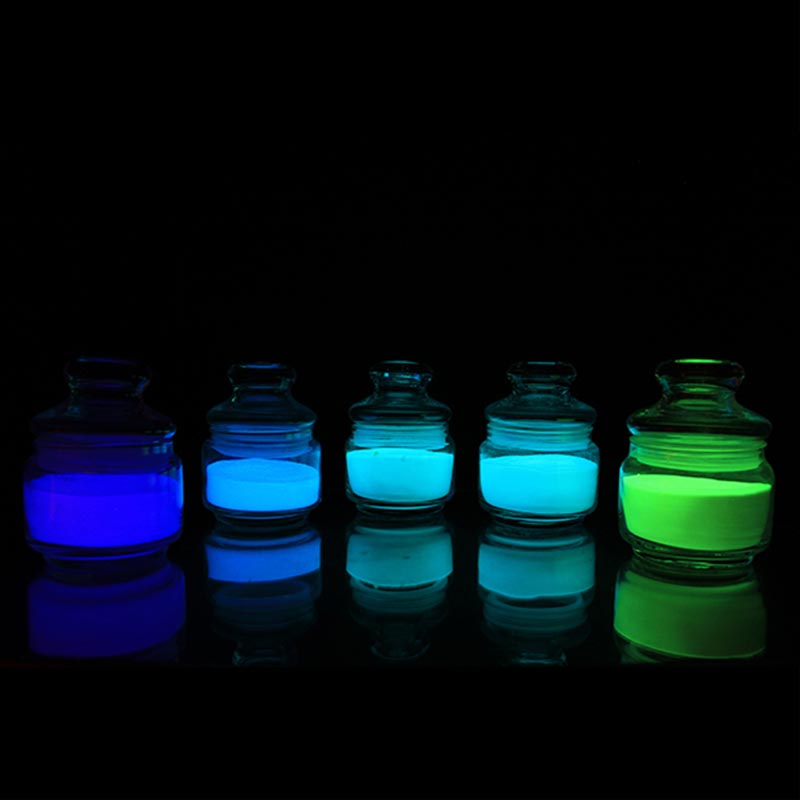
What Is Phosphorescent Pigment and How Does It Deliver Long-Lasting Glow Performance?
What Is Phosphorescent Pigment?
Phosphorescent pigment—commonly referred to as glow-in-the-dark pigment—is a type of inorganic photoluminescent particle capable of absorbing visible light, UV light, or natural daylight and releasing it slowly without any powered light source. Unlike fluorescent materials that emit light immediately during excitation and stop glowing once the light is removed, phosphorescent pigments store energy and release it gradually, enabling sustained and visible luminance for hours.
The most stable and high-performance phosphorescent pigments are based on strontium aluminate (SrAl₂O₄:Eu, Dy), which offers significantly longer afterglow brightness and duration than traditional zinc sulfide–based pigments.
How Does Phosphorescent Pigment Work Scientifically?
The mechanism relies on a process called persistent photoluminescence.
-
Absorption – Photons enter the pigment structure.
-
Energy Storage – Electrons are excited into trap states within the crystal lattice.
-
Emission – Electrons return slowly to ground state, releasing light over time.
-
Repetition – The process is non-destructive and repeatable, allowing years of cycle use.
Technical Parameters of High-Grade Phosphorescent Pigment
Below is a professional parameter table for reference in product selection, formulation design, and material comparison:
| Parameter Category | Technical Specification | Description |
|---|---|---|
| Chemical Composition | SrAl₂O₄:Eu²⁺,Dy³⁺ | High-brightness, long-afterglow crystal matrix |
| Common Emission Colors | Yellow-green, blue-green, sky blue, blue | Yellow-green provides the highest brightness |
| Particle Size Options | 5–15μm / 15–40μm / 40–75μm / 75–150μm | Small particle sizes for ink; large for coatings/plastics |
| Luminance (10 min) | 2500–5000 mcd/m² | Measured after standard light exposure |
| Afterglow Duration | 8–12+ hours | Depends on formulation and environment |
| Heat Resistance | Up to 600°C | Suitable for high-temperature processing |
| Weatherability | UV-stable, non-radioactive, chemically inert | Designed for outdoor and industrial use |
| Recommended Applications | Coatings, plastics, ceramics, printing, road safety | Broad cross-industry compatibility |
These specifications help engineers and manufacturers match the correct pigment grade to project needs while ensuring compatibility with resin systems, binders, and processing environments.
Why Is Phosphorescent Pigment Important for Industrial Use and Safety Applications?
Why Do Industries Prefer Phosphorescent Pigment Over Traditional Luminescent Materials?
-
Superior Brightness & Afterglow Duration
Strontium aluminate pigments produce brightness levels up to 10–20 times that of traditional zinc sulfide pigments and maintain visible glow throughout the night after proper exposure. -
Energy-Saving & Sustainable
No electricity or wiring is required, making these pigments ideal for emergency orientation, architectural safety paths, and outdoor use. -
Chemical Stability & Long Service Life
Pigments are moisture-resistant, UV-resistant, and stable across temperature variations, ensuring durability in harsh environments such as marine and industrial facilities. -
Versatile Material Compatibility
These pigments can be incorporated into:-
Epoxy, acrylic, polyurethane, and solvent-free coatings
-
Injection-molded plastics
-
Silicate and ceramic systems
-
Printing inks & fabric coatings
-
Road marking paints
-
Industry Use-Cases Where Phosphorescent Pigment Provides Critical Value
A. Safety & Emergency Systems
Emergency exit markings, stair treads, tunnel guidance, offshore platforms, ships, aircraft cabins, and public buildings require reliable, non-electric visibility during power failures.
B. Outdoor & Architectural Design
Residential walkways, garden stones, decorative surfaces, resin floors, artistic installations, and water-feature designs benefit from visually striking glow effects.
C. Industrial Production
Injection-molded glow plastic parts for tools, night-visible components, gauges, and equipment markings improve usability and safety during low-light operations.
D. Consumer Products
Toys, crafts, sporting goods, fishing gear, novelty items, and wearables incorporate glow pigments for both function and aesthetics.
These advantages highlight why phosphorescent pigment is not merely decorative; it is a functional material that enhances safety, visibility, and energy efficiency across industries.
How Is Phosphorescent Pigment Used Effectively in Manufacturing, Coatings, and Plastics?
How to Select the Appropriate Grade of Phosphorescent Pigment?
Professional selection requires considering:
-
Application method (coating, printing, casting, molding)
-
Required brightness level
-
Exposure to UV, water, or chemicals
-
Particle size vs. surface smoothness
-
Binder compatibility
-
Processing temperature
For example:
-
Fine particle sizes (5–15μm) → best for printing inks & thin films
-
Medium sizes (15–40μm) → coatings and solvent-based systems
-
Large sizes (75–150μm) → plastics and resin casting where stability and brightness are priorities
How to Improve Glow Performance During Formulation?
Professionally recommended guidelines include:
-
Use clear, transparent binders to reduce light obstruction.
-
Maintain pigment loading between 15–30% for coatings.
-
Avoid metallic fillers or opaque pigments that block light absorption.
-
Use UV-absorbing protection layers such as UV-cured topcoats for outdoor applications.
-
Ensure even particle dispersion to avoid clustering or reduced brightness.
How to Maintain Long-Term Stability in Outdoor Applications?
-
Apply weather-resistant topcoats.
-
Avoid acidic or highly alkaline environments.
-
Ensure long-term UV protection without blocking luminescence.
-
Use encapsulated pigment grades when exposed to moisture.
These techniques ensure stable glow performance and long service life in real-world conditions.
What Will Shape the Next Generation of Phosphorescent Pigment Materials?
Trend 1: Development of Ultra-Long Afterglow Materials
Research is increasingly focused on extending glow duration beyond 24 hours and improving brightness for safety systems requiring uninterrupted guidance.
Trend 2: Integration with Smart Materials
Phosphorescent pigments will integrate into smart coatings, sensors, photo-activated polymers, and IoT markers for logistics and night-visible tracking.
Trend 3: Micro-Particle Optimization for Printing & Electronics
Demand for nano-modified and ultra-fine glow pigments will rise for precision printing, micro-optical devices, and functional inks.
Trend 4: Sustainable Materials & Green Manufacturing
Low-temperature firing, solvent-free dispersions, and eco-safe formulations will support global sustainability requirements.
Trend 5: High-Performance Outdoor Coatings
Advanced encapsulation technologies will improve UV resistance, moisture stability, and color customization for architectural and marine applications.
These trends indicate strong expansion potential for phosphorescent technology in both high-tech and consumer markets.
FAQ — Common Questions About Phosphorescent Pigment
Q1: Why does phosphorescent pigment sometimes appear dimmer than expected?
A1: Dimming usually results from inadequate light exposure, too thin of a coating layer, low pigment concentration, or interference by opaque binders. Optimal performance requires 15–30 minutes of full illumination and sufficient pigment loading.
Q2: Can phosphorescent pigment be used outdoors for long periods?
A2: Yes. Strontium aluminate pigments are suitable for long-term outdoor use when properly formulated with UV-resistant topcoats. Encapsulated grades offer additional protection against moisture and weather conditions.
The Expanding Role of Phosphorescent Pigment and How to Collaborate with a Reliable Supplier
Phosphorescent pigment has proven to be a high-performance material with wide industrial relevance, offering unmatched brightness, environmental benefits, long-lasting glow, and broad compatibility with coating systems, plastics, ceramics, and printed media. As industries advance toward safer, more energy-efficient, and visually enhanced solutions, this pigment continues to play a central role in architectural guidance systems, industrial safety, outdoor design, and innovative consumer products.
Future development will further enhance glow duration, improve stability, integrate smart functionalities, and support green manufacturing. To implement high-grade phosphorescent pigment effectively, working with a specialized manufacturer is essential for proper technical guidance, stable supply, and product customization.
Tongge, known for high-purity strontium aluminate phosphorescent pigments and precision material engineering, provides professional support for coating formulators, manufacturers, and product developers worldwide. For customized specifications, bulk supply, or technical consultation, contact us to discuss your project requirements.