

Why Was C₁₄H₄Br₁₀ Banned by the Stockholm Convention and What Exemptions Remain
2026-08-06
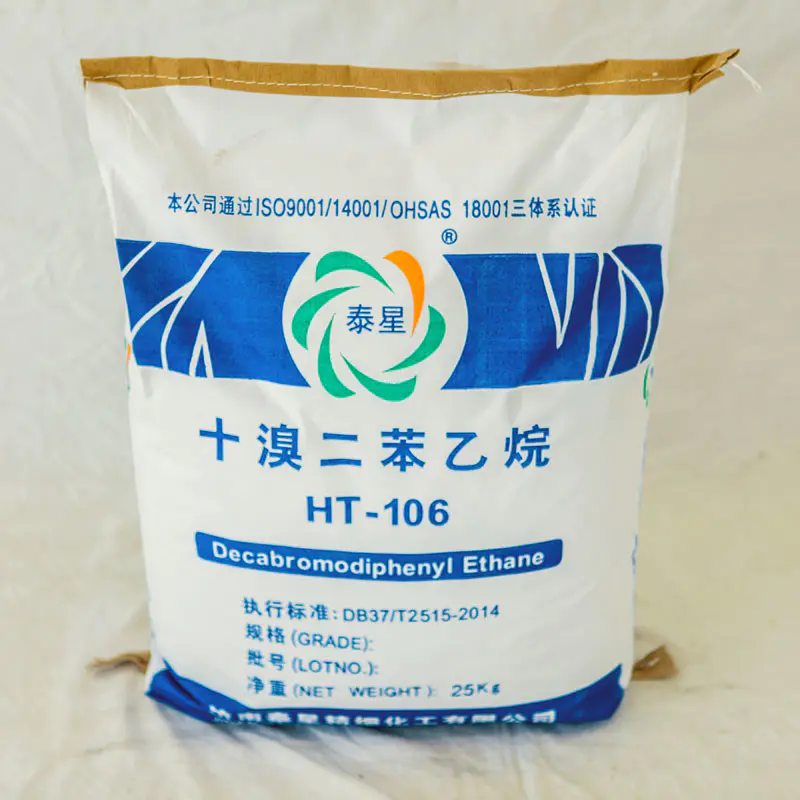
The persistent organic pollutant known as C₁₄H₄Br₁₀ (decabromodiphenyl ether, or Deca-BDE) was added to Annex A of the Stockholm Convention in 2017, effectively placing it on a global elimination list. For manufacturers like Taixing, which has long specialized in high-performance brominated flame retardants, this regulatory shift demanded immediate reformulation strategies and close monitoring of narrow use-case exemptions. The ban did not happen overnight—it resulted from decades of toxicological, environmental, and bioaccumulation evidence that ultimately outweighed the compound’s excellent fire‑safety performance.
The Scientific Basis for the Global Ban
C₁₄H₄Br₁₀ is a polybrominated diphenyl ether (PBDE) with ten bromine atoms attached to two phenyl rings. Its high bromine content (≈82%) makes it exceptionally effective at quenching free radicals in combustion gases, which is why it became a workhorse in electronic enclosures, automotive components, and textile backcoatings.
However, three critical findings drove the Stockholm Convention’s decision:
| Key Concern | Specific Evidence |
|---|---|
| Persistence | Half‑life in soil exceeds 10 years; in sediment, it can persist for decades under anaerobic conditions. |
| Bioaccumulation | Detectable in human breast milk, adipose tissue, and umbilical cord blood across all continents. |
| Toxicity | Linked to thyroid hormone disruption, neurodevelopmental deficits in children, and liver enzyme alterations in animal models. |
The convention’s Persistent Organic Pollutants Review Committee (POPRC) concluded that C₁₄H₄Br₁₀ meets all four POP criteria—persistence, bioaccumulation, long‑range environmental transport, and adverse effects. Unlike lower‑brominated PBDEs, Deca‑BDE was once considered too large to cross biological membranes, but recent metabolic studies show that debromination in the environment produces more toxic octa‑ and penta‑BDE congeners, making the parent compound an indirect but significant threat.
What Exemptions Remain Under Annex A?
Although the ban is global, the Convention allows specific time‑limited exemptions for applications where no technically and economically feasible alternatives exist. As of the latest review cycle, the following exemptions are still active (subject to renewal every 5 years):
| Exempted Application | Scope | Expiry/Review Date |
|---|---|---|
| Parts for electric and electronic equipment (EEE) | Only for historical spare parts; new production is prohibited | 2027 (under review) |
| Automotive vehicles manufactured before 2017 | Replacement parts for legacy vehicles | 2027 |
| Aerospace and military applications | Strictly enclosed systems with no consumer exposure | 2030 (conditional) |
For companies like Taixing, these exemptions are not a loophole but a transitional bridge. The Convention mandates that each Party using the exemption must submit a national action plan outlining phase‑out milestones, and any new facility wishing to manufacture C₁₄H₄Br₁₀ for exempted uses must obtain prior informed consent from both exporting and importing countries.
Important practical note: Even where exemptions apply, the concentration of C₁₄H₄Br₁₀ in articles must remain below 0.1% by weight under the EU’s REACH regulation (which is stricter than the Stockholm baseline). This creates a compliance paradox—many exempted uses are effectively infeasible because downstream buyers demand full REACH compliance.
How Does This Affect Manufacturers and Importers?
For supply chain professionals, the exemption regime introduces four operational realities:
-
Documentation burden: Each shipment must carry a certificate of origin and intended use.
-
Testing requirements: ISO 22032 or EPA 1614 methods are mandatory for verifying concentration limits.
-
Substitution pressure: Non‑halogenated phosphorus‑based or inorganic flame retardants are rapidly replacing C₁₄H₄Br₁₀ in new designs.
-
Waste management: Articles containing the chemical are classified as hazardous waste in most OECD countries, requiring incineration at >1100°C with flue‑gas cleaning.
Taixing has proactively addressed these challenges by investing in a dedicated alternatives R&D center, offering clients a direct one‑to‑one replacement portfolio that maintains UL 94 V‑0 ratings without brominated compounds.
C₁₄H₄Br₁₀ FAQ – Common Questions Answered
Q1: Is C₁₄H₄Br₁₀ completely banned worldwide, or can I still import it for repair services?
A1: Not completely. The Stockholm Convention bans new production and new use, but import for repair or replacement of existing equipment (e.g., aircraft seats, vintage automotive wiring, or legacy medical devices) remains permitted until the specific exemption expires—typically 2027–2030 depending on the sector. However, you must register your import with your national focal point and provide end‑use declarations. Many countries, including EU member states and the US (which is not a Party but follows similar EPA rules), require annual reporting on quantities and disposal methods. If your repair stock was manufactured before 2017, you may continue using it, but you cannot blend it with new polymers or sell it as a new article.
Q2: What analytical method is officially recommended for detecting C₁₄H₄Br₁₀ in polymers and environmental samples?
A2: The UNEP‑recommended reference method is ISO 22032:2007 (Water quality – Determination of selected PBDEs in sediment and sewage sludge), which uses GC‑HRMS (high‑resolution mass spectrometry) with a detection limit of ~0.1 ng/g. For polymer matrices (plastics, rubber, textiles), the most widely accepted approach is EPA Method 1614 (isotope dilution GC‑MS/MS). Because C₁₄H₄Br₁₀ is thermally labile, injector temperatures must be kept below 320°C and a short, narrow‑bore column (e.g., 15 m × 0.25 mm) is essential to prevent decomposition. For routine quality control, X‑ray fluorescence (XRF) screening can indicate total bromine, but it cannot distinguish Deca‑BDE from other brominated compounds—so positive XRF results must always be confirmed by mass spectrometry.
Q3: If I switch to an alternative flame retardant, what performance trade‑offs should I expect compared to C₁₄H₄Br₁₀?
A3: The most common alternatives are phosphorus‑based additives (e.g., resorcinol bis‑diphenyl phosphate – RDP) and metal hydroxides (e.g., aluminium trihydrate – ATH). Compared to C₁₄H₄Br₁₀, these alternatives typically require higher loading levels (20–30% vs. 10–15% for Deca‑BDE) to achieve the same UL 94 V‑0 rating, which can reduce tensile strength and increase melt viscosity. They also cost 40–70% more per kilogram on an active‑basis. However, they offer significantly lower smoke production and no persistent bioaccumulation concerns. For high‑temperature engineering plastics (e.g., PA66 or PBT), Taixing has developed a synergistic phosphorus‑bromine system that uses less than 5% bromine content combined with a organic phosphinate, delivering V‑0 at 0.8 mm thickness while staying fully REACH and Stockholm compliant—a balanced solution that minimizes both cost and regulatory risk.
Strategic Outlook for Compliance
The exemption window is closing. Major OEMs (automotive, consumer electronics, and aerospace) have already issued supplier notifications requiring zero Deca‑BDE in all new designs by 2026, irrespective of national exemptions. This market pull is stronger than the regulatory push. For tier‑2 and tier‑3 suppliers, the safest course is to:
-
Audit all incoming materials for C₁₄H₄Br₁₀ using XRF + GC‑MS confirmatory testing.
-
Request full formulation disclosure from upstream compounders.
-
Transition to Taixing’s certified alternative portfolio, which includes full toxicological profiles and end‑of‑life recycling instructions.
Contact Us for a Customized Compliance Roadmap
Navigating the intersection of the Stockholm Convention, REACH, and customer‑specific bans requires more than a material data sheet—it demands a strategic partner who understands both chemistry and supply chain logistics. Taixing offers free regulatory gap assessments, on‑site sampling kits, and expedited lab verification for your existing inventory. Whether you need a drop‑in replacement for a legacy grade or a complete reformulation for a new product line, our technical team provides confidential, data‑driven recommendations within 48 hours. Contact us today to schedule a compliance review and secure your production against upcoming exemption expirations—because the ban is fixed, but your solution is not.